

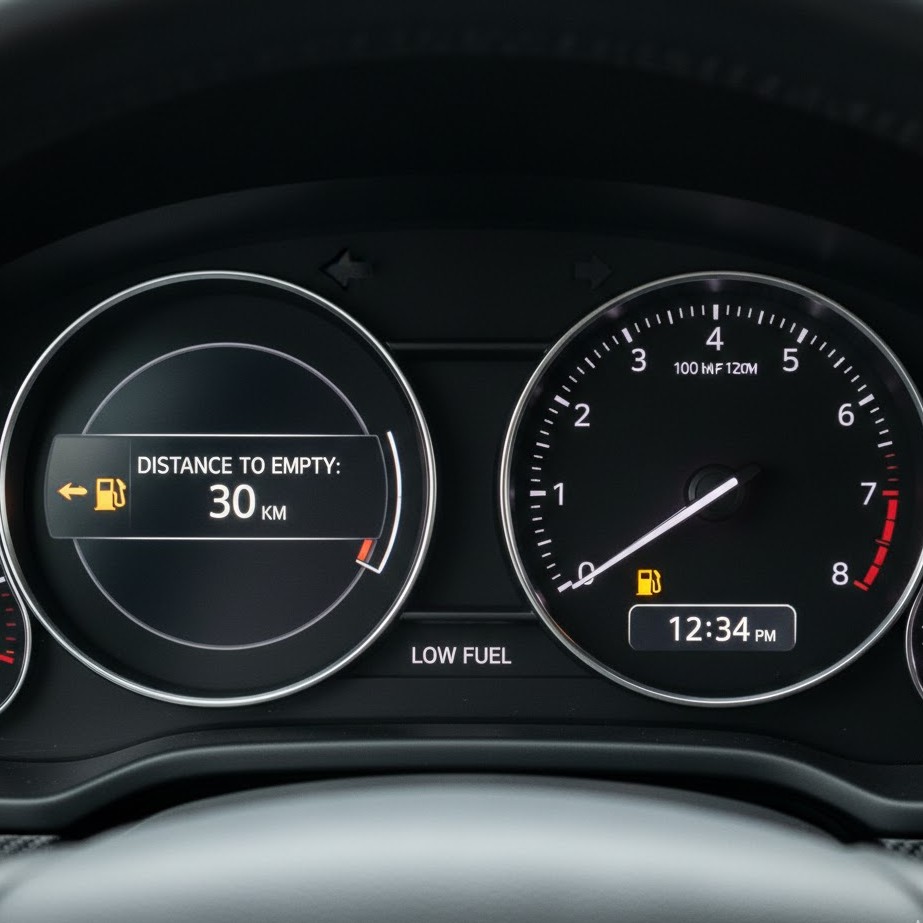
THE IMPACT OF RUNNING YOUR GAS TANK TOO LOW
1. Protecting Your Fuel Pump Your fuel pump relies on gasoline for cooling and lubrication. When the tank runs low, the pump may draw in air instead of fuel, causing it to overheat and wear out prematurely. This can lead to costly repairs that are easily avoidable with regular refueling. 2. Avoiding Sediment and Contaminants Small amounts of sediment and impurities naturally settle at the bottom of your fuel tank. Operating on very low fuel levels can stir up these particles, allowing them to enter your fuel system. Over time, this can clog filters, injectors, and other critical components, reducing engine performance and efficiency. 3. Reducing Engine Strain A low fuel level makes your engine work harder to pull fuel from the tank. This added strain can lead to hesitation, misfires, and decreased overall performance—problems that can be prevented by maintaining a healthy fuel level. 4. Maintaining Optimal Fuel Efficiency Modern vehicles rely on a precise balance of fuel and air for maximum efficiency. Running with minimal fuel can disrupt this balance and lead to reduced gas mileage, costing you more at the pump in the long run. 5. Preventing Vapor Lock and Starting Issues Low fuel levels increase the risk of vapor lock—when fuel evaporates before it reaches the engine. This can make your vehicle difficult to start, especially in hot weather, and can disrupt your driving plans unexpectedly. 6. Avoiding Fuel Degradation Gasoline can degrade over time. If your tank is consistently low, fuel may sit longer than it should, reducing its effectiveness and negatively impacting engine performance. 7. Staying Safe on the Road Running out of gas at the wrong moment can put you in a vulnerable situation, whether you’re on a busy highway or in an unfamiliar area. Maintaining a comfortable fuel level helps ensure you always have enough to reach a safe location or nearby gas station.